
Parents and teachers need to make phonetic facts a priority!
Flashcards for sound/symbol correlation
If children do not learn their 400 addition, subtraction, multiplication, and division facts, the students experience math problems with fractions and decimals. If children in grades one and two do not learn their phonetic facts, the pupils struggle with reading and fail to read at grade level, as evidenced by annual state tests and the National Association of Educational Progress tests for 4th and 8th graders. Since only 100 phonetic facts need to be learned, and since the school year lasts 180 days, what is the problem? Phonetic facts are important! Parents and teachers should insist on mastery of these fundamental phonetic tools to ensure healthy learners and future productive citizens.
WHAT IS A PHONETIC FACT?
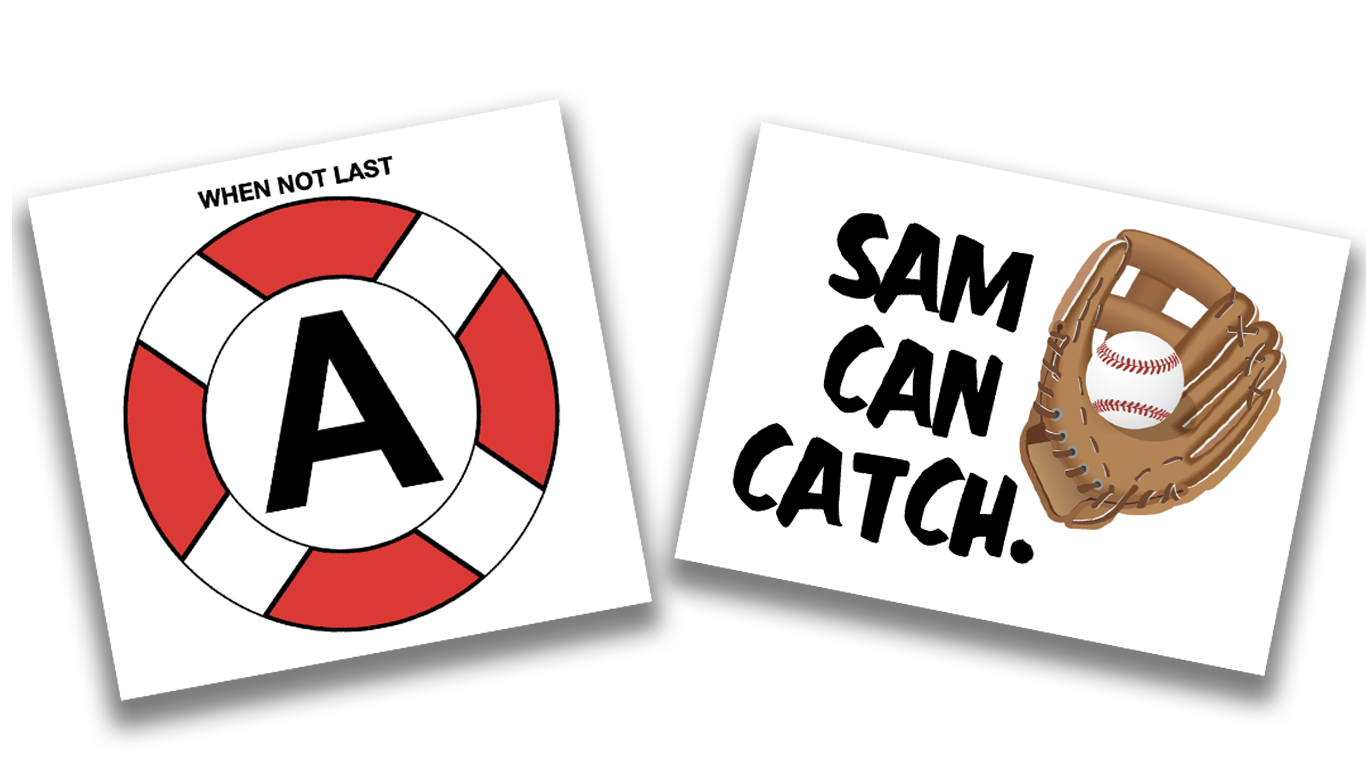
When looking at a letter, knowing instantly the sound or the sounds the letter makes and when it makes each sound are the essential ingredients of a phonetic fact. Some letters, like D for dog, make only one sound. Vowels, some letters, and some letter combinations make 2 or more sounds. For example, A when it ends a syllable, says A like David’s Vacation; A, when not ending a syllable, makes a short vowel sound like Sam Can Catch. Likewise, C will sound like S if the C precedes the vowels E or I or Y, as in Cindy cycles to the city. All other C’s make a K sound: Cake, cookies, and cola are not nourishing foods. Vowels, some letters, and some letter combinations like CH and IE make 2 or more sounds. Mastery of 100 phonetic sound-to-symbol tools enables children to read with speed and accuracy, an important step towards literacy.
HOW DO PHONETIC FACTS SUPPORT READERS
WITH MULTISYLLABIC WORDS?
Learning two strategies for dividing words into syllables eliminates the need to memorize words. Students read small syllables, one or more letters with only one vowel sound, from left to right until the word is decoded. The individual syllables can be read by first and second graders who have learned their 100 flashcards, their six syllable types, and the two syllabication strategies. According to Dr. Samuel Orton, 86% of words can be read phonetically with this methodology; 14% of words originate from foreign languages and are often called “trick” words. DOES and NONE are non-phonetic words that fail to conform to American phonics. Consequently, teachers and parents should invest the time, whether long or short, to ensure that children master their sound-to-symbol knowledge, their six syllable types, and their syllabication strategies. Then, 90% or more of American children will achieve literacy.
Opposing points of view are not included. Based on known research and public demand, 41 states, including MA, passed laws mandating evidence-based teaching of phonics during the past five years. The federal legislature is discussing a similar law now. Phonetic instruction and mastery provide foundational skills for literacy.
Susan B. Kahn, MEd
After 25 years as a Special Education Teacher in Arlington, MA, Susan B. Kahn wrote and published 24 Sue’s Strategies language arts texts on Amazon and 98 instructional animated videos on YouTube to promote literacy. She also advocated for the successful passage of the Early Screening Law in 2018 and the Right To Read Law in June, 2026 in MA.
Recent Posts

Reading
See the Bundle

Spelling
See the Bundle

Grammar
See the Bundle